Latest News
President’s Report 2011
Nepal Australia Friendship Association Qld (NAFA)
This report was submitted at the AGM held on 3 April 2012
The Big Picture, NAFA’s focus and guarantee to donors In 2011, NAFA allocated $127,900 to 31 ongoing programs and one-off projects in Nepal, spanning the range of NAFA priorities, with 12 allocated to education projects, 11 allocated to health/disability projects and 8 to other community based development-related projects, including child care and remote village electricity infrastructure.
NAFA continued to have success in 2011 attracting generous donors willing to either support important one-off projects such as the micro-hydro project in Lumsa or make regular donations towards NAFA’s twelve ongoing programs in health and education. These donations, at times topped up from NAFA’s general funds, continue to make a real difference in particular to the lives of people living in remote villages.
Women, children and remote communities remain NAFA’s priority target groups. Our efforts are focussed on the remote districts of Dhading, Solu Khumbu and Okhaldunga, as well as villages that can be accessed within one day’s bus travel from Kathmandu. We also support programs in the pottery town of Thimi near Kathmandu and two child care centres in the regional town of Pokhara.
All NAFA projects are locally managed and NAFA expects the local community to make a contribution towards each new infrastructure-related project, for example by undertaking volunteer labour to bring materials to the site and to help in construction.
NAFA executive officers also visit all projects (at their own expense) at least once a year to ensure funds allocated are used in accordance with the approved purpose and the project has been successfully completed. NAFA also guarantees that 100% of donations to NAFA go directly to Nepal, without any administration expense taken off.
A closer look at NAFA’s projects in Nepal
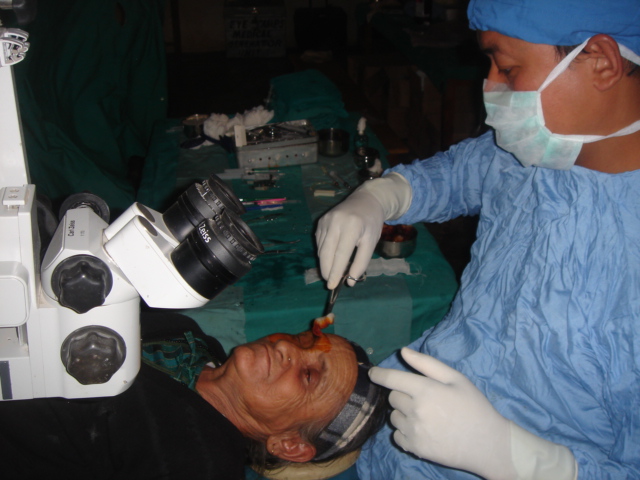
Health As has been the case since NAFA’s inception, NAFA sponsored a remote eye screening and cataract surgery clinic run by the Tilganga Eye Centre. This year’s two day clinic was held in the remote village of Sindhuli, with a total of 1,235 adults and children screened and 136 patients undergoing successful cataract surgery. Over the years, these clinics have restored the eyesight of thousands of cataract patients living in remote villages who could not afford to travel to Kathmandu for their operation.
Since co-funding (with AusAid) the construction of the health clinic over ten years ago, NAFA continues to subsidise the salaries of three health workers at the Tawal health centre, which provides primary health care to over 4,000 people living in Tawal and 4 other nearby villages. In 2011, NAFA supported blood-testing training for the health clinic Coordinator, Beg, who with Ausaid Kathmandu support with blood-testing equipment, can now test for typhoid, TB, sugar levels, hemoglobins etc. Patients from the area now do not have to travel a day’s trip away to Dhading to have their blood tested.
NAFA also funded the first ever eye screening for 12 schools and villages around Tawal in the Dhading District. The 5.5 day eye camp was conducted by Dr Detlev Gueck, a German eye doctor who has been working with monks from Kopan Monastery in Kathmandu, conducting eye camps in India and Nepal for many years. Nearly 1,100 people registered for the camp (then going next door to hearing camp conducted at the same time), with Dr Gueck assessing a person’s vision, treating infection and prescribing/fitting 250-300 sets of glasses which he brought over with him from Germany.
After first supporting the program in 2010, NAFA continued to be proud supporters of the HearingNepal Program, developed and conducted through the dedicated volunteer work and financial generosity of Lew and Sue Tuck from Whitsunday Hearing. Consistent with Lew and Sue’s philosophy of Nepalese helping Nepalese, NAFA’s support for the HearingNepal Program includes support to a small primary ear care service based in Kirtipur, Kathmandu, the Nepalese Association of Hard of Hearing (NAHOH).
Lew and Sue work in partnership with Keshab Dangol from NAHOH and monks from the Kopan Monastery to provide ear screening and treatment to people in Nepal. In 2011, funds were used to purchase dry aid kits, ear moulds, hearing aids, batteries and equipment donated to NAHOH. NAFA also supported a 5.5 day hearing clinic in Tawal (in conjunction with an eye clinic conducted simultaneously), to which 12 schools in the area were invited to attend. In 2011 NAFA also supported NAHOH directly by helping the service move to better premises in Kirtipur with some funds for fit-out and rental support. NAFA support for hearing screening and treatment complements nicely NAFA’s longstanding support of eye care through its support of Tilganga’s eye screening and cataract surgery remote clinics.
NAFA also continues to subsidise health clinics funded to be held monthly at a carpet factory in Thimi. This subsidisation includes free medicine for families who otherwise would not be able to afford the medication. A second doctor provided by the local Rotary branch in Thimi has strengthened the effectiveness of the clinics for poor families who work in the carpet factory. 38 children from this carpet factory are sponsored by NAFA to attend VSN school in Thimi.
In support of people with disabilities NAFA provided funds to purchase a music system, music CDs, a T.V., books and an inverter for electricity to help a disability home in Jorpati, Kathmandu better cope with electricity load-shedding that is part of everyday life in Nepal. NAFA also funded the purchase of 37 blankets for people with a mental illness who are housed as inmates of Dhulikel jail.
Finally, it was another busy year for distributing jumpers and beanies knitted by approximately 80 women in Brisbane. In 2011, thanks to these wonderful 80 or so women knitters, the generosity of Singapore Airlines and Thai Airways who provide 10 Kg excess baggage allowance for NAFA supporters who bring the bags of jumpers over to Nepal, approximately 1376 jumpers and beanies were distributed in 3 rural villages, Patale in Solu Khumbu Sinke in Kavre, Shyama in Ramechap. Another 686 jumpers were distributed to the 3 Butterfly crèches, Thimi crèches and health clinic, old age and disabled children’s shelters in the Kathmandu valley.
Education Highlights for 2011 in NAFA’s support for education projects in Nepal include an increase in funding allocated under NAFA’s Further Education and Training (FEAT) program and the replacement/upgrade of classrooms in remote villages.
NAFA has two child sponsorship programs at Prisoners Assistance (PA) Nepal in Sankhu and Vinayak Shiksha Niketan (VSN) School in Thimi, with the number of children sponsored for education by NAFA up to Grade 10 now totalling 90 children, with $39,300 sent over to support their education. Over the years we have seen what a big difference this program has made to the children and their families.
NAFA’s focus now is beyond the student’s success in passing the national exams held at the end of Class 10 to obtain their School Leaving Certificate (SLC). They face enormous disadvantages from their backgrounds to continue past this minimum academic qualification. In the case of VSN sponsored children are from poor families in this pottery/farming town, with many of the sponsored children’s families working and living in a local carpet factory. Most of the children in PA Nepal have parents who are in prison or have either been abandoned by their parents or are orphans. Children at Tawal come from poor subsistence farming backgrounds.
NAFA’s Further Education and Training (FEAT) program aims to partner with child sponsors and families to provide opportunities for young people involved in NAFA and Joy Foundation Nepal supported projects to undertake vocational training or post Grade 10 (college years 11 and 12) and Grade 12 (Bachelor) study to improve their employment chances. In 2011, $11,400 was allocated through the FEAT program to support 29 students in post Grade 10 study or vocational training.
Through the program, NAFA is now supporting young people in PA Nepal study Pharmacology, Hotel Management and Management and graduates from VSN school study Nursing (5 students), Environmental Science and Chartered Accountancy. NAFA has also supported a second young man from Tawal undertake training in electrical wiring that has provided skills critical to the success of the micro-hydro project there.
In addition to continuing to sponsor two teachers at the school in Tawal and a teacher at Gamauli, NAFA also provided funding in 2011 for a number of school-based projects to replace or build classrooms, toilets and roofing in the Solu Khumbu (Narjing and Bhir Kharka) district in the Everest region, Jatdeni in Sindhulpalchok district, Mahakali in Kavre district and other villages (Gamauli and Manthali). Child care NAFA continued its financial support to two child care centres operated by the Butterfly Foundation in Pokhara. These centres support low-caste families who have moved to Pokhara from villages in search of casual day labour work. In addition, NAFA funded the establishment of a child care crèche for carpet factory families in Thimi in response to an evaluation of the health clinic and child sponsorship programs in Thimi the previous year.
Electricity for the three remote villages of Tawal, Tawal Besi and Lumsa NAFA was very pleased to see two micro-hydro systems that it supported in 2011 completed and opened. The two systems (20 KW for Tawal/Tawal Besi and 12 KW for Lumsa in the Solu Khumbu are now providing electricity to approximately 350 households (1,750 villagers), 3 schools and a health clinic. Access to electricity will also have economic, health, education, environmental, recreation and social benefits for people in those three remote villages.
NAFA executive officers visited the two micro-hydro sites and were very impressed with the volunteer labour and cash contributions made by local villagers that brought both projects to completion in line with projected timelines and very close to their projected budgets.
A look to 2012 NAFA will continue to support projects that achieve positive and sustainable health, education and other development-oriented outcomes for disadvantaged communities and individuals in Nepal. These projects will include continued support of NAFA’s twelve ongoing health, education and child care programs, as well as support for one-off project projects of merit.
NAFA will also continue to seek to work in partnership with other like-minded donors such as Joy Foundation Nepal, Smile Back to Me Spain and Nepaleducaid (Austria) to improve the wellbeing of the Nepalese people, particularly those living in remote communities.
In 2012, NAFA will again review its portfolio of projects and its current mix between ongoing and one-off projects and will continue to draw it’s loyal support network for donations that support NAFA’s existing project portfolio, as well as any new projects considered for approval. I am confident this support will enable NAFA to continue its good work in Nepal for years to come.
Thank you for supporting NAFA Although NAFA is a small association, its projects are making a real difference in improving the lives of particularly disadvantaged children, families and communities in Nepal. However, these improvements wouldn’t be realised without the commitment and plain hard work of volunteers here in Australia and in Nepal.
There is the NAFA management committee and other members who come to meetings every month, make decisions and who very competently undertake administrative and organising tasks in a volunteer capacity throughout the year. Ujjwal Gautam, NAFA’s Treasurer and Helen Zada, NAFA’s Child Sponsorship and FEAT Coordinator are two examples of volunteers that NAFA relies on in managing our small volunteer NGO and overseas development-related programs. I would also like to acknowledge in particular the work that Kim Herringe (Red-Creative) did in the year to develop a new website platform for NAFA and to Brenda Hazelwood who has put in hours of work populating it with new articles. I would also like to thank Jim Drapes at Backtrack who as NAFA’s Website Coordinator in recent years patiently and competently worked alongside Kim in the previous version of the website that is so important to an Association trying to tell outsiders who we are and what we do.
Other NAFA management committee members help with NAFA’s main fundraising events. I would like to make particular mention this year of Peter Brockett and Stewart Jones who stepped up and applied their organising and creative skills in tasks associated with NAFA’s two main fundraising events, the Nepalese New Years fundraising dinner in May and Nepal in the Park in September.
The Committee is blessed to be supported by a large number of volunteers who help with these events. These include the distinguished “Red Shirts” who are visible at the Nepalese New Years Dinner and Nepal in the Park. Pat Le Gros is an example of someone who over many years has organised and donated prizes to the raffle at NAFA’s annual fundraising dinner.
I would like to express particular appreciation to the Nepalese community in Brisbane who generously support both NAFA and the Nepalese Association of Queensland (NAQ). We could not do either of our two major fundraising events without their support. Apart from the critical role that the Nepalese community in Brisbane plays in supporting NAFA’s main fundraising events, In the past two years they have also raised approximately $4,500 in each year towards specific education projects in Nepal. I would like to thank Rajan Koirala for coordinating this additional and inspiring effort.
NAFA also values the role that the Nepalese community in Brisbane plays in providing advice on projects NAFA supports in Nepal. This is done through membership on NAFA’s management committee (Nirmala Pandeya, Dipak Paudyal, Kalpana Kaphle and Mana Ranjit in 2011) and through providing advice on specific projects. The expert advice that Kamalayan Shrestha provided in relation to two NAFA supported micro-hydro projects played a major role in providing the confidence needed by the Committee to approve those two important initiatives for the villages of Tawal, Tawal Besi and Lumsa.
In 2011, creative fundraising ideas included Sunsuper’s Dream competition. Kylie Gilbert coordinated the email drive that resulted in NAFA receiving the most votes for its dream and winning a $5,000 donation to build two classrooms in the remote village of Mahakali.. Helen Zada coordinated a second Challenge Yourself fundraiser, which raised $3,600 to help two other disadvantaged students who had graduated from VSN Thimi fulfil their life-long dream to study nursing.
NAFA market stalls have also become a consistent fundraiser for NAFA. In the past five years $40,000 has been raised through NAFA market stalls ($9,400 in 2011) and it is great credit to those involved in purchasing the items and organising the market stalls, including Brenda Hazelwood, Debbie Leigh, Megan Richardson and others.
Executive members, including in particular Ross and Brenda Hazelwood also spend five months each year in Nepal, at their own expense, identifying and assessing new applications, visiting and assisting with all of NAFA’s projects and inspecting completed projects. Ross also updates the child profiles of children sponsored at PA Nepal and Brenda continued with her weekly (where possible) craft sessions with the children there.
In addition, Brenda coordinates not only the distribution of jumpers and beanies in Nepal, but also the purchase of goods for sale at NAFA market stalls back in Australia. Brenda also sources beads and material from retail shops in Kathmandu to create jewellery, felt items and other saleable items for the markets. In 2011 Ross and Brenda received the Friend of Nepal award from the Non-Resident Nepali Association (NRNA), which I know Ross and Brenda were very proud and honoured to receive. I would like to again congratulate them on receiving this prestigious national award.
In 2011, other NAFA executive members and supporters also spent significant time in Nepal. Lew and Sue Tuck consolidated and expanded their HearingNepal Program, spending a lot of their own time and funds in 2011 ensuring the sustainability of the program through their own efforts and by strengthening further their partnership with the Nepal Association of Hard of Hearing (NAHOH) and Kopan Monastery.
Helen Zada spend significant time in Thimi working on the the child sponsorship and FEAT programs as well as doing volunteer teaching at the school. She and Eb Moll then joined us on our visit to Tawal to undertake a range of activities that included English practice teaching and volunteering in the eye camp. John and Megan Croese made the effort to join Ross and Brenda on their annual trip to the Solu Khumbu to visit NAFA supported projects and assess new proposals. Other NAFA supporters visited and volunteered their time and expertise in NAFA projects. A special mention to Nepalese NAFA committee members and supporters who visited and volunteered their time and expertise in NAFA projects, including Kiran Shrestha, Nirmala and Khilraj Pandeya and their daughters Neha and Sneha Thanks all.
I would also like to thank all the individual and corporate donors who support NAFA. It isn’t easy trying to decide which of the many worthy aid and other charitable organisations to support and we very much appreciate those who in many cases continue to loyally support NAFA year after year. We also appreciate those individuals and businesses who have donated prizes which help make our fundraising events successful.
In Nepal, our Project Coordinators volunteer their time to help their communities: Phurba Sherpa for the Solu Khumbu/Okhaldunga districts; Chandra Tamang and Kanchha Tamang for the Tawal area; Surendra Prajjapati for Thimi; Indira Rana Magar for PA Nepal children’s home and Govinda Pahari for Butterfly Foundation’s child care centres. NAFA’s success in Nepal relies on the commitment and wisdom of these Coordinators.
NAFA would also like to thank the staff (Ramita, Pradip, Tenzin and Karmala) and board members of Joy Foundation Nepal under the leadership of Mr Raju Shrestha for supporting NAFA’s work in Nepal. Joy jointly funds a number of projects, provides office and storage space for NAFA executive members and NAFA projects. Joy staff also support NAFA in assessing and monitoring projects, including help with translation, culture and program-related advice, community work, student placement supervision, finance and other general administration.
In completing my fifth year as President of NAFA I would like to thank all of you for supporting NAFA in 2011. Deborah and I look forward to continuing to make a small contribution to helping NAFA achieve its mission of making a real difference to people’s lives in Nepal.
Rod Setterlund President April 2012
Knitters Newsletter April 2012
Hello to all the Nepal Knitters,
I hope everyone had a good Christmas and a healthy start to the new year.
Ross and I had a very successful time in Nepal these last 5 months. We visited many areas to assess our association’s different projects and some of the success stories were
- The installation of micro hydro electric plants in two villages, one servicing 105 homes and the other for 250 homes
- The completion of three toilets at a school
- The re-roofing and skylights in 4 classrooms at one school
- The completion of 2 classrooms at each of 4 schools and
- the distribution of over 900 jumpers and 1100 beanies
These jumpers and beanies went to a children’s home, a home for disabled children, a home for the elderly, 3 schools in remote villages, 5 pre school crèches and 2 health clinics.
One of the interesting places we distributed jumpers was a home for physically disabled children. About 50 children live in this two storey home in Kathmandu. The children who are able to negotiate the stairs live in the upstairs rooms while the more physically disabled children sleep in dormitories on the ground level. They come from all different parts of rural Nepal where they were unable to attend school due to the rugged terrain and the distance they had to travel to school. Many children in rural and remote Nepal walk over an hour to school every day. These children are physically unable to do this.
Living at this home in the city gives them the opportunity to attend school. The home is partially funded by overseas donors and is run by a couple who are also disabled. Although these children live many miles away from their families and probably have no contact during the school term, they are a happy lively bunch who look after each other. Some of the children were born with their disabilities such as club foot and other bone deformities while others received their permanent injuries through accidents or illness. They are serious about their schooling and studies as they know this is their best opportunity to make a success of their lives.
We took jumpers and beanies to the home one day after school. They were so excited to have visitors, they took us around the home showing us their dormitories and how they had decorated them with pictures and streamers and then to the kitchen and dining area to share some of their food. There are three women who work there keeping the home clean and preparing food for these growing children. Some of the children were helping in the kitchen peeling the vegetables for the evening meal. We took biscuits with us and the children were delighted to have a rare sweet treat.
We handed out the jumpers and beanies from the smallest to the biggest, they were so excited as they had never received anything so nice before. They all had big smiles on their faces and kept coming back to us to say thank you.
Before we hand out the jumpers and beanies to any group of people we explain to them, through interpreters, how we received the articles. We explain that all the jumpers and beanies are knitted with love and care by many women in Australia. We say that the knitters are all volunteers who enjoy making these articles and want to make the lives of children in Nepal a little better. Thank you to all our knitters.
Jumper sizes
Your jumpers and beanies are wonderful, they are bright and cheerful and gratefully received. Except for the crèches (age 3 and 4), we mainly give jumpers to school age children and therefore we need jumpers to fit children from age 5 to about age 15. Therefore the minimum chest size for the smallest jumper should be no less than 33cm across the front or 66cm in circumference.
Mums over there as well as here like to get clothes a bit big for their child so that they will last two or three years – because of this the larger sizes are very popular.
Most knitting patterns are fine, but some are a little short in the body – this is a guide on the size of jumpers we need and the approx length.
| Underarm measurement of the front | Length from shoulder |
| 33 cm or 13 inches | 45 cm or 18 inches |
| 35 cm or 14 inches | 47 cm or 19 inches |
| 40 cm or 16 inches | 51 cm or 20 inches |
| 44 cm or 17.5 inches | 56 cm or 22 inches |
| 48 cm or 19 inches | 62 cm or 24 inches |
| 51 cm or 20 inches | 65 cm or 25.5 inches |
There are a few things I like to explain to our new knitters. In Nepal mothers like to wrap their babies in traditional clothing so we do not take over any baby clothes. When we hand out the jumpers the mothers ask for jumpers a few sizes bigger than the child, this is so the garment can last a few years. Nepal has a very cold winter and the village children wear many layers of tattered clothing and the new jumper is pulled over all the existing clothing.
It is for these reasons that we prefer to take larger jumpers for children from age 4 to adult.
To make this program worthwhile, we try to keep our costs down. We have to send all the jumpers and beanies by air to Kathmandu and without the airlines help with the freight we could not continue this program. With this limited amount of free freight each year we have to limit ourselves to sending only jumpers and beanies. We are unable to take scarves, blankets, socks or used clothing.
Your discarded things – our gems
Thanks you so much for your wonderful response to this appeal. Due to the limited amount of free freight we receive I have had to stop taking many of the haberdashery items. I have been using these items when teaching craft and sewing to a large group of girls. I have been teaching craft for over 6 years now and some of the girls are able to make things such as crocheted jackets, ponchos and other clothing for themselves without patterns. They love the bigger size buttons to decorate the things they make so I am still trying to take larger buttons, about the size of 20c piece or bigger, so if you have any of those which you don’t want I would be grateful if you could add them to your knitting bags.
Your discarded costume jewellery comes in useful as I can use the beads to remake necklaces, bracelets and earrings which I sell at markets, the money we make goes back to our organization. Some of the plastic beads which are light I take to Nepal and teach the girls to make jewellery for themselves. They get a big thrill from this and often make things to give away to their family or school friends.
I really appreciate you sending me any of your discarded jewellery or large buttons but please don’t go out and buy things, keep your money for wool.
Don’t forget to put your name in the bag with the jumpers so we can maintain our knitters list and keep up to date for the newsletter.
As usual I have included a page of photos of the children and their jumpers. I hope you are able to spot one of your jumpers in the crowd. If you have access to the internet you can view more photos on facebook – Nafa knitters – you are welcome to become a ‘friend’ on facebook.
Every year we give a number of talks at meetings and retirement villages. I have been traveling to Nepal for over 25 years and enjoy sharing my experiences with others. This information talk with slides shows the beautiful countryside, the mountains, how the people live and their diverse culture.
I give these talks to entertain and inform people about our organization and Nepal.
Our parent organization Nepal Australia Friendship Association is a Brisbane based charity run by volunteers. We are a non religious and non political association who try to help the people of Nepal improve their lives. We raise money by selling goods at our craft market stalls however we do not expect or pressure our audience to buy our craft goods or give donations.
If you would like us to come and give your organisation an interesting and informative talk (with no fund raising obligations) please contact me at the below address or phone 3207 4774
Drop off points for knitting – contact Brenda on nafasec@hotmail.com
Thanks again to all our knitters for their fantastic support
Brenda Hazelwood
Tawal micro-hydro system officially opened!
NAFA’s President, Rod Setterlund officially opened (as “Chief Guest”) the 20 kw micro-hydro system on 13 February 2012 in front of the Tawal/Tawal Besi community, Ross Hazelwood (NAFA’s Project Coordinator), Chandra Tamang (Tawal Coordinator) and other distinguished guests, including Mr Suresh Shrestha, REDP engineer from the Nepalese Government who oversaw the 9 month project.
Volunteer labour from individual families was a major factor in the success of the project over the 8 month construction period. Every family carried an allocated number of kgs of sand, stones, cement, wire, wooden/metal poles and pipes, electrical-mechanical equipment and other materials to the site from the riverbed and road-head.
During construction in November, we witnessed women carrying 45 kg bags of sand from the river (a 2 hour down and 4-5 hour up trip) and 22 men carrying the generator that weighed nearly 300 kgs from the road-head. They said it took them 4 days to carry it to the site and this was after a 3 day trip to carry the 320 kg turbine.
240-250 houses will be connected by the end of February for electricity as well as two schools and a health clinic. In addition, small businesses will be established with applications for electricity connection for a furniture business and a grain mill already in process. The two operators of the system (Ashok and Kipa) have both received NAFA sponsored 6 month electric wiring training and will receive further micro-hydro specific training organised by REDP.
At the opening ceremony Mr Shrestha said in his speech that projects of this size (20 KW) often take 2-3 years to complete and are often more than two times over budget due to problems at the community level with volunteer labor, local expertise etc. He said it was a credit to the Tawal community that they completed the project in line with the originally projected timeline and very close (within 3%) of the original budget. Thank you to all those who contributed to both the Tawal and Lumsa projects and congratulations to both communities for achieving such a significant development goal.
Lumsa Micro Hydro Project complete
CONGRATULATIONS
to the Lumsa community for their determination and hard work in completing their micro hydro project in 7 months. The community were very determined to bring electricity to their village, they took out personal and business loans to help raise the money for this project. Only after these monies were raised were they able to obtain funding from the rural development NGO REMREC to begin the project.
Eighty households participated in the work, sharing the volunteer labour to carry the materials and equipment needed to the site. Part of a hillside forest has to be cleared for the penstock pipe and half a kilometre of headrace cannels dug to bring the water from the source. Some of the Lumsa electricity committee took time away from their trekking jobs to source, plan and complete this project.
Khili Sherpa said after the project was completed and the electricity has been connected to her home – ‘now that I have light it seems that before at night I was walking around with my eyes shut’. Yangi Sherpa said that she was now able to watch the children doing their homework while preparing dinner and would be saving money on kerosene which she used for lighting.
Newsletter #1 #2 #3
- Supporting a talented disabled artist
- Carpet factory creche
- Craft lessons
- Discussing Silviya’s engineering course
Each year our members volunteer their time for big and small projects in Nepal. Our main projects are recorded on the website but during their stay in Nepal our members experience many different and unusual events. The newsletter was created to share these incidents with you. They give a more personal view of our work in Nepal and go some way to explain our continued fascination and interest in this diverse and wonderful country.
Building classrooms Manthali
Location: Ramechap district (1 day drive on Jiri road east from Kathmandu)
Date: August 2011
Partner: Community Development Society (CDS), Manthali
Beneficiaries: 500 students at Karkala Devi English Boarding School and another 70 additional students will benefit
Objective: Construct 6 classrooms on top of existing school
Details: CDS was able to obtain funds for 75% of the construction costs and applied to NAFA for the remaining amount of $3,785 to start the construction. We were advised that previously the 6 classes were taught in temporary sheds with tin roof.
Outcomes: The application was approved at the NAFA August 2011 meeting for the construction of 6 classrooms and funds transferred soon after through the Joy Foundation Nepal. The NAFA Nepal Project Coordinator visited the school in mid January 2012 to view the construction of the classrooms.
The classrooms still required the cement roof to be poured after which the interior would be soon finished. The principal advised that the rooms would be ready for the start of the new school year. Since the application was received at the beginning of the year the school had started class 7 and 8. They now advised that when these classrooms are finished the school would be able to go up to class 10.
Construction of 2 Pre-school rooms Narjing
Location: Lower Solu Khumbu, (Everest region)
Date: August 2011
Partner: Shree Sekar Sing Lower Secondary School, Narjing
Objective: Construction 2 Pre-school rooms
Beneficiaries: 30 -40 pre- school children from 4 Wards in Garme VDC & 1 Ward in Nele VDC
Details: In 2011 the village applied to NAFA for funds of $7,630 to construct 2 classrooms in the school for approximately 30 to 40 children from 5 surrounding wards. The school advised it had incoming funds for 2 nursery teachers from local and overseas donors.
Outcome: The application was approved at the NAFA August meeting and funds transferred soon after through the Joy Foundation Nepal . Four members from NAFA visited the school in late December 2011 to view the construction of the classrooms and found that they were almost complete. The exterior was nearly finished and only the cement floor and interior walls and ceiling had to be completed. The school advised they expected it to be finished well before start of their new school year.
Construction of Pre-school and Grade 1 classrooms Jalkeni
Location: Sindhulpalchok district, (district east of Kavre on the road towards Jiri)
Date: August 2011
Partner: Shree Gyan Kunja Primary School, Saagachok, Jalkeni
Objective: Construction of 2 classrooms for Pre-school and Grade 1
Beneficiaries: 150 students from the village of Jatdeni
Details: The school applied forAUD $14,200 to start a school on new vacant ground the villagers were able to purchase. Previously students had attended their schooling in an old dairy building which was not suitable for both the number of students and for effective teaching. They applied for funds to complete 4 classrooms for Pre-schoool to Grade 3.
Outcome:NAFA August meeting approved the construction of 2 classrooms in a joint funding with Non Residents Nepalese Association (NRNA). Funding for the other 2 classrooms will be considered between NAFA & NRNA in 2012.
The Nepal Project Coordinator will visit the school in mid December 2011 & early 2012 to view the construction of the school and provide an update on the project.
School toilets and reroofing classrooms Shyama
Location: Ramechap district (one day walk from Jiri village roadhead)
Date: January 2011
Partner: Shree Setidebi Primary School, Shyama -7 Bhirkharka, Dolakha
Beneficiaries: 225 students and teaching staff
Objective: Construction of school toilets and reroofing of existing school building
Details: This school had old unusable toilets and the students were using the nearby bush as a toilet which was not hygienic. The main school building needed reroofing due to age and deterioration. They applied to NAFA for funds of A$2,963.00 for these 2 projects.
Outcomes: NAFA members visited the school in January 2011 and assessed the application. It was found that the school was in need of new toilets and the school roof was rusted with numerous holes causing problems during the rainy season. The members reported back to the committee and the application was approved.
NAFA members will revisit the school in January 2012 to assess the completed work.
Friend of Nepal of the Year 2009-2010 Award
NAFA executive members win prestigious national award
At Nepal in the Park, Ross and Brenda Hazelwood were presented with the prestigious Friend of Nepal of the Year 2009-2010, awarded by the Non-Resident Nepali Association (NRNA). Mr Narayan Pokharel, President of the Nepalese Association of Queensland (NAQ), presented the national award on behalf of NRNA and NAQ, who had nominated Ross and Brenda for the award.
This is a joint nomination of a husband and wife team, Ross and Brenda, who for over 20 years have dedicated their time and talents to improving the lives of disadvantaged people in Nepal, as founding and still very active members of NAFA.
Ross and Brenda spend 7 months of the year in Brisbane helping to organise NAFA’s fundraising events (including a Nepalese New Years fundraising dinner and Nepal in the Park) and activities such as market stalls. Brenda is Vice President of NAFA while Ross holds the positions of Secretary and Nepal Project Coordinator. In addition to these roles, Brenda uses her skills in craft work to make cards and jewelry to sell at NAFA stalls. She also set up NAFA Knitters, a project which involves approximately 80 women knitting jumpers and beanies for children in poor families in Nepal.
For five months a year, Ross and Brenda live in Nepal, at their own expense, helping with NAFA projects. They play an important role in identifying and assessing new applications, visiting and assisting with all of NAFA’s projects and inspecting completed projects. This role involves in some cases treks (again at their own expense) to remote areas of Nepal to assess and monitor NAFA projects.
Ross also updates the child profiles of approximately 35 children sponsored for education by NAFA at Prisoners Assistance (PA) Nepal. For several years Brenda has played an important role for the children at that home by conducting a craft program which teaches the children to sew, knit, and make jewelry – often a lovingly made item goes to their parent in prison. Brenda believes craft work provides skills for life.
With Ross’s support, Brenda also coordinates not only the distribution of jumpers and beanies in Nepal, but also the purchase of goods for sale at NAFA market stalls back in Australia. Brenda also sources beads and material from retail shops in Kathmandu to create jewellery, felt items and other saleable items for the markets, which brought in almost $10,000 for NAFA in 2010.
Ross and Brenda play an active role in NAFA’s Further Education and Training (FEAT) Program for young Nepali boys and girls to help them find their first job through work visits/work experience and NAFA sponsorship in post School Leaving Certificate (SLC) study or vocational training.
The kind recognition by NRNA and NAQ has provided a unique opportunity to acknowledge a couple, Ross and Brenda who have a deep respect for Nepal and the Nepalese people and culture. They have committed a significant amount of their time, energy and their own resources for over 20 years to support disadvantaged people in Nepal. Without each other’s support they wouldn’t have been able to achieve what they have and NAFA is very proud and wishes to congratulate Ross and Brenda for winning this prestigious award and thank NAFA and NAQ for the recognition of their contribution to helping disadvantaged people in Nepal.
Successful Nepal in the Park 2011
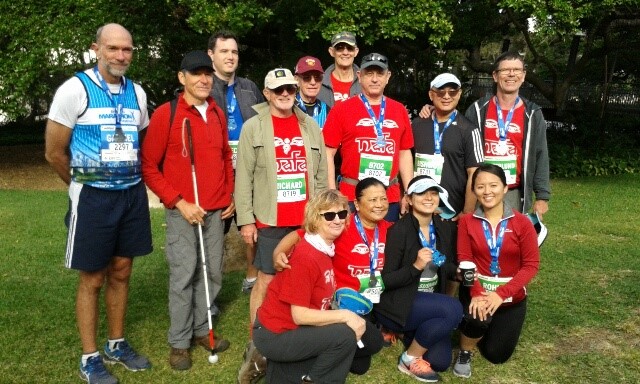
What a successful day! Perfect weather for hiking and enjoying all the activities on offer. Something for everyone with Nepali food and dancing, face painting, learning Nepali cooking, the market stalls, henna painting, massage and the pinatas among the favourites.
On the fundraising side we made a record $10,000 which will be allocated to worthy projects in Nepal All projects are assessed and monitored to ensure the money is well spent.
A big thanks to all our supporters: the Red Shirts, hikers, patrons, everyone who sponsored hikers and those organisations who donated prizes and goods, including:

The Nepalese community particiate in many different areas such as cultural dancing and authentic food
ABC 612 Radio
Anaconda
Backtrack
Dipendra Thapa
Goodlife Health Club Bardon
High Spirits
Himalayan Delights
Innovative Sign Solutions
K2
Kathmandu
Kathmandu Newa Chhe’n
Macpac
Mountain Designs
Paddy Palin
The Tibetan Kitchen
.
.
Nepal Knitters Newsletter April 2011
April 2011 Number 11
Hello to all the Nepal Knitters,
Another year has gone past, we spent 5 months in Nepal and this year, during the winter we distributed over
1000 jumpers and 1000 beanies
Imagine all these jumpers and beanies being sorted in a small office!! We identified the schools and children’s homes and asked them for a list of he children’s ages. We then packed the appropriate jumpers and beanies and marked the bags. These bags travelled by rickshaw, taxi, bus and light aircraft to the different areas.
We distributed the knitted goods at 2 children’s homes, 4 schools in remote villages, 5 schools in a small village in Kathmandu valley and small jumpers at 2 baby clinics. This year jumpers were taken to remote villages in 4 different areas of Nepal. Each had not received jumpers for a number of years and some we had not visited before.
In one of the villages on the day we planned to distribute the weather turned inclement and by time we were going to distribute it was raining and lightly snowing in the nearby hills. As it was so cold the children were very happy to receive their “presents”. We were working at this village for 7 days and due to the weather we noticed that the children wore the jumpers every day.
At another village a similar thing occurred with light snow falling as we distributed the jumpers, so it was timed very well as they did not have many other warm clothes. At both of these villages NAFA is assisting with funds for the villagers to put in Micro Hydro plants to bring electricity to their houses. This will only be lighting, however it will help each house in their kitchen so they do not have to rely on the light from the fire to see what they are doing. Also the children will benefit by being able to complete their homework at night with better lighting.
At one of the village we had not been to before, the school had applied for funding for new school toilets and replacement of the old roof which had many holes in it. The toilet was totally unusable & the children were having to go in the nearby bush. This was also a poor farming area and the children at the school had never been given jumpers before so were happy to receive them. Thank you to all our knitters.
Jumper sizes
Your jumpers and beanies are wonderful, they are bright and cheerful and gratefully received. In the last few years I have been asking you to knit larger jumpers which many knitters have been able to do, so thanks for helping there.
Mums over there as well as here like to get clothes a bit big for their child so that they will last two or three years – because of this the larger sizes are very popular.
Most knitting patterns are fine, but some are a little short in the body – this is a guide on the size of jumpers we need and the approx length. 
| Underarm measurement of the front | Length from shoulder |
| 33 cm or 13 inches | 45 cm or 18 inches |
| 35 cm or 14 inches | 47 cm or 19 inches |
| 40 cm or 16 inches | 51 cm or 20 inches |
| 44 cm or 17.5 inches | 56 cm or 22 inches |
| 48 cm or 19 inches | 62 cm or 24 inches |
| 51 cm or 20 inches | 65 cm or 25.5 inches |
No need to knit anything much bigger. Lets see how that works this year.
Maroon jumpers for Buddhist monks
Thanks for knitting the maroon jumpers for the monks, we had a great response and have distributed all the maroon wool that was donated. This will go with our members Sue and Lew to remote areas for the young monks.
A message to our new knitters
There are a few things I like to explain to our new knitters. In Nepal mothers like to wrap their babies in traditional clothing so we do not take over any baby clothes. When we hand out the jumpers the mothers ask for jumpers a few sizes bigger than the child, this is so the garment can last a few years. Nepal has a very cold winter and they village children wear many layers of tattered clothing and the new jumper is pulled over all the existing clothing.
It is for these reasons that we prefer to take larger jumpers for children from age 2 to adult.
To make this program worthwhile, we try to keep our costs down. We have to send all the jumpers and beanies by air to Kathmandu and without the airlines help with the freight we could not continue this program. We have a limited amount of free freight each year and so unfortunately we have to limit ourselves to sending only jumpers and beanies. We are unable to take scarves, blankets, socks or used clothing.
Your discarded things – our gems
Thanks you so much for your wonderful response to this appeal. We took over the haberdashery items such as buttons, lace, thread, needles etc. I made up sewing kits for women in remote areas who have little access to shops and these kits were well received. I also taught the girls at the children’s home to crochet with wool and nylon lace and they made lovely pencil bags and then sewed in the old zyps. They loved the ‘big’ buttons and used them to decorate the things they have been making like tops and ponchos.
We have been able to use the discarded costume jewellery either remaking necklaces, bracelets and earrings. I also took over a lot of the lighter plastic beads and taught the children at the home to make earrings. They pored over the beads deciding which was best for their design and all went away with one or two pairs of lovely original earrings.
If you have anything at home you don’t want such as beads, buttons etc, please put it in your bag with your jumpers BUT please don’t go out and buy things, keep your money for wool.
Last year we asked for
- An earring without a partner which we can recycle as a pendant
- Any old beads or broken necklaces which we could recycle
- Felt scraps to make small felt toys
- Buttons, cotton thread, unused zips, lace or any other sewing notions
- Embroidery thread for gift cards
Don’t forget to put your name with the jumpers you give us so that we can maintain our knitters list and keep up to date with who is knitting.
Take a look at the photos of the happy children – I hope you are able to spot one of your jumpers in the crowd.
Every year we give a number of talks at meetings and retirement villages. I have been traveling to Nepal for over 20 years and enjoy sharing my experiences with others. This information talk with slides shows the beautiful countryside, the mountains, how the people live and their diverse culture.
I give these talks to entertain and inform people about our organization and Nepal. If you would like us to come and give your organisation an interesting and informative talk (with no fund raising obligations)
Or if you need more information please contact Brenda nafasec@hotmail.com
NAFA Health Workers Save Lives and Prevent Illness in an Impoverished Subsistence Farming Area.

- Patient resting with saline drip during treatment.
- NAFA Health workers Beg Bahadur Tamang and Sunita Tamang suturing wounds.
NAFA has been supporting the Tamang people in a remote mountain area with co-operative initiatives in health, education and infrastructure projects for many years.
NAFA Tawal Health Clinic. Above left -NAFA Health workers Beg Bahadur Tamang and Sunita Tamang suturing wounds. Above right – Patient resting with saline drip during treatment. .
Download “Project Paper” here
Project Update
Thanks to the generorsity of 5 wonderful supporters, we now have ongoing donations which will cover the project costs for the next 3 years. These donations will enable NAFA to increase the health worker’s salaries and provide training and resources when needed. The health workers and the people of Tawal and surrounding villages are extremely appreciative of the fact that NAFA funding and support makes access to a health service possible. An initial evaluation of this project shows that it is meeting the aim of improving the health of local people through good quality prevention and treatment.
Qld Government Gambling Community Benefit Fund
NAFA wishes to acknowledge and express appreciation to the Queensland Government Gambling Community Benefit Fund for the $5,374 grant provided in December 2009 to purchase computer equipment for the Association and traditional costumes for children and adults who perfrom at various NAFA fundraising events and other activities organised by the Nepalese Association of Queensland.
Brisbane trekking company donates
Brisbane based trekking company Back Track Adventures will donate $100 to NAFA for every trekker travelling with them to Nepal from the 2011 season onwards. If you want to trek and also assist NAFA check out their website. http://www.backtrack.com.au/